
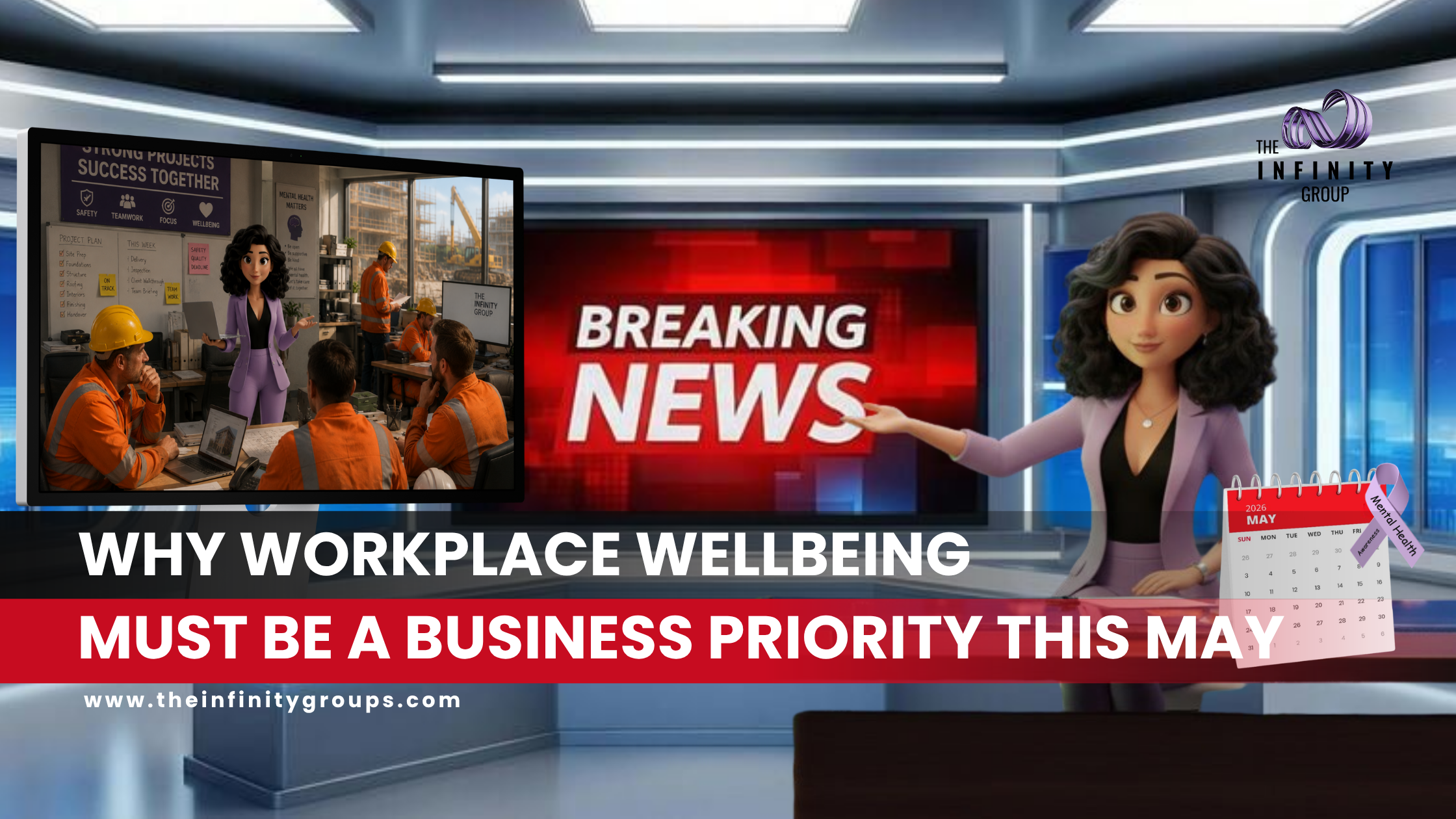
Each May provides an opportunity for organisations across the UK to reflect on an increasingly important issue: mental health in the workplace. While awareness campaigns encourage open dialogue, many businesses have yet to fully embed these conversations into everyday working life.
Mental health is no longer a peripheral concern. It is a core component of organisational performance. The Health and Safety Executive (HSE) reports that stress, anxiety, and depression account for over half of all working days lost in Great Britain each year—highlighting a significant impact on productivity, employee engagement, and overall business performance.
For employers, the message is clear: supporting employee wellbeing is not optional. It is fundamental to building a resilient, sustainable organisation.
Why Mental Health at Work Matters
Mental health is complex and dynamic. Employees experience fluctuations in wellbeing influenced by professional demands, personal circumstances, and workplace culture. As a result, challenges are not always visible.
High-performing individuals may quietly struggle with stress, burnout, or anxiety. Without the right environment and support, these challenges can escalate, affecting not only the individual but also team performance and morale.
Some of the most common workplace pressures include:
- Excessive workloads and tight deadlines leading to chronic stress
- Sustained high-pressure environments contributing to burnout
- Uncertainty around roles, expectations, or job security
- Interpersonal challenges within teams
- Employees working through illness, commonly known as presenteeism
Left unaddressed, these factors can lead to increased absence, reduced productivity, and long-term organisational risk.
Wellbeing as a Strategic Priority
Organisations that take a proactive approach to mental health consistently see measurable benefits. These include:
- Improved staff retention and reduced recruitment costs
- Higher levels of productivity and performance
- Greater employee engagement and commitment
- A stronger organisational reputation as an employer
- Reduced absence and disruption to operations
Conversely, failing to prioritise wellbeing can result in declining morale, increased turnover, and potential legal implications if responsibilities are not met.
Ultimately, workplace wellbeing is not just an HR initiative—it is a business strategy.
Building a Mentally Healthy Workplace
Creating a supportive workplace does not require immediate large-scale transformation. It begins with deliberate, consistent actions:
1. Leadership and Culture
Change starts at the top. When leaders normalise conversations about wellbeing and model healthy working practices, they set the standard for the wider organisation.
2. Policies and Frameworks
Well-defined policies around mental health, absence, and flexible working provide clarity and reassurance. These should be actively communicated and regularly reviewed to remain effective.
3. Access to Support
Offering resources such as Employee Assistance Programmes, occupational health services, or external support organisations ensures employees have access to help when needed.
4. Managing Workload
Unrealistic expectations and excessive workloads are key contributors to stress. Regular reviews and clear role definitions help maintain a healthier balance.
5. Using Data Effectively
Monitoring absence trends, engagement levels, and feedback enables organisations to identify issues early and take informed action.
How The Infinity Group Can Help
At The Infinity Group, our focus goes beyond compliance. We share practical insights to help businesses navigate employee wellbeing, complex workplace challenges, and organisational change—supporting stronger performance and better outcomes.