
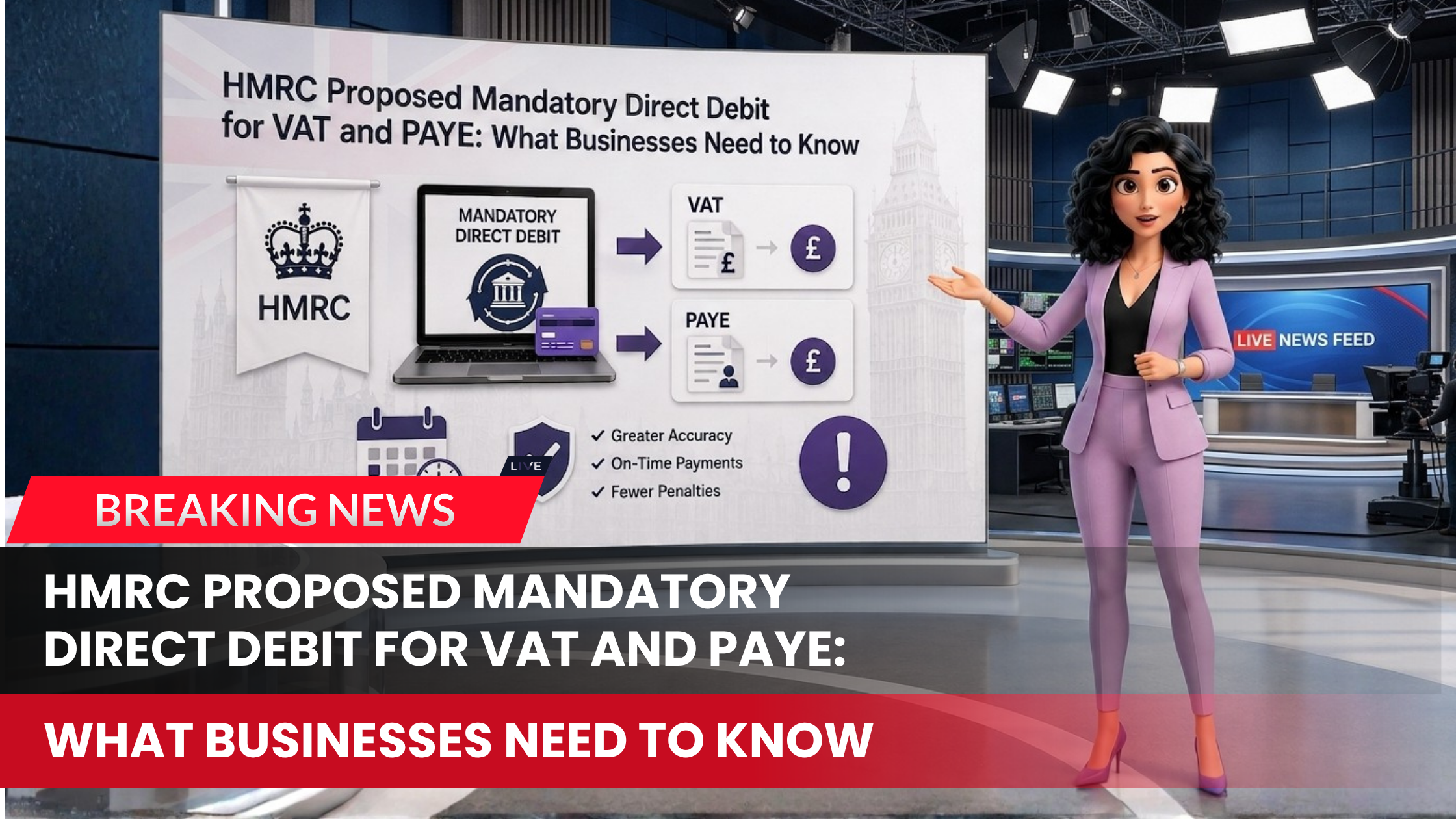
HMRC has launched a consultation on whether on whether businesses should be required to pay most VAT and PAYE return liabilities by Direct Debit. The proposal forms part of the Government’s wider effort to improve payment timeliness, reduce avoidable payment errors and prevent the build-up of tax debt. The consultation was published on 23 June 2026 and closes on 16 August 2026. Importantly, this is not yet a legal requirement, and no implementation date has been announced. Businesses should continue using HMRC’s currently accepted payment methods unless and until any future changes are confirmed.
Businesses, tax advisers and representative organisations can review the consultation and submit responses directly to HMRC before the closing date.
What Is HMRC Proposing?
The Government is seeking views on requiring businesses to pay liabilities arising from VAT and PAYE returns by Direct Debit. According to HMRC, the objective is to improve the timeliness of tax payments, reduce payment errors and simplify the payment process. The consultation follows an announcement made at Autumn Budget 2025, where the Government committed to exploring greater use of Direct Debit for these taxes.
At present, businesses can generally pay VAT and PAYE using various methods, including Faster Payments, Bacs, CHAPS, debit cards, corporate credit cards and Direct Debit. Under the proposed changes, Direct Debit would become the standard payment method for most VAT and PAYE return liabilities, subject to any exceptions ultimately approved by the Government
Why Is HMRC Considering This Change?
Submitting a tax return and paying the resulting liability are currently separate actions. A business may file an accurate VAT return or payroll submission on time but still encounter issues with payment, such as:
- Missing the payment deadline.
- Entering an incorrect payment reference.
- Allocating payment to the wrong tax period.
- Making a payment for the wrong amount.
HMRC believes Direct Debit could reduce these issues by creating a closer link between the return and the payment process. Once a return has been submitted, HMRC can calculate the amount due, notify the taxpayer and collect the payment automatically through an approved Direct Debit mandate.
For some businesses, this could reduce administration and provide greater certainty around payment processing. However, it may also increase the importance of checking returns carefully before submission because the reported liability could be collected automatically.
How Could It Affect VAT Payments?
Many VAT-registered businesses already pay VAT by Direct Debit through their HMRC online account. Under current arrangements, the Direct Debit mandate must generally be set up before a VAT return is submitted, and HMRC then collects the amount due automatically following the filing process.
If Direct Debit becomes mandatory, businesses that currently make manual VAT payments may need to review their internal approval and compliance procedures. Key considerations could include:
- Ensuring VAT returns are reviewed before submission.
- Maintaining sufficient funds in the nominated bank account.
- Monitoring HMRC payment notifications.
- Managing bank account or mandate changes.
- Planning for automatic collections within cash-flow forecasts.
HMRC also acknowledges that some taxpayers may require different arrangements, and the consultation seeks views on what exceptions may be necessary.
How Could It Affect PAYE Payments?
Employers can currently pay PAYE using several methods, including Direct Debit, bank transfer, debit or corporate credit card, and, in some circumstances, cheque. Where an employer sets up a Direct Debit through their HMRC online account, HMRC can automatically collect the amount due based on the information reported through PAYE Real Time Information (RTI).
If the proposal goes ahead, businesses that currently make PAYE payments manually may need to adapt their payroll and payment processes. This could make it particularly important to ensure payroll submissions are accurate and that sufficient funds are available in the nominated bank account ahead of collection.
Employers may also need to strengthen internal controls around payroll approvals, monitor HMRC collection notifications and keep their Direct Debit details up to date. Under the current Direct Debit process, HMRC normally tells employers the amount and collection date at least three working days before taking payment.
The consultation is also considering practical barriers and possible exceptions, so the final requirements may differ depending on the outcome of the consultation.
PAYE Direct Debit guidance on GOV.UK
What Practical Issues Should Businesses Consider?
The proposal involves more than a change in payment method. If Direct Debit becomes mandatory, businesses may need to review their approval processes, cash-flow planning and internal controls. Automatic collection could place greater importance on ensuring VAT returns and payroll submissions are accurate before they are filed.
Businesses should also ensure their Direct Debit arrangements and bank account details remain up to date, while maintaining clear procedures for monitoring HMRC collection notices and resolving any payment issues. With payments linked directly to submitted returns, stronger review procedures may help reduce the risk of errors and unexpected liabilities.
Will There Be Exceptions?
Possibly. HMRC has not yet decided which exceptions may apply if the proposal proceeds. The consultation seeks views on circumstances where Direct Debit may not be suitable, including taxpayers who cannot use standard Direct Debit arrangements, face genuine practical barriers or are digitally excluded. Any exceptions and eligibility criteria would be confirmed through future legislation and guidance
Could Penalties Be Introduced?
No decisions have been made, but the consultation discusses potential enforcement measures. These include:
- Introducing consequences where a business uses a payment method other than Direct Debit without an approved exception.
- Linking certain payment-related benefits or deadline extensions to Direct Debit users.
For example, HMRC is seeking views on whether some existing payment concessions should only remain available when liabilities are paid through Direct Debit. These ideas remain consultation proposals and do not represent current law
How The Infinity Group Can Help
If mandatory Direct Debit is introduced for VAT and PAYE, businesses will still be responsible for ensuring returns are accurate, liabilities are correctly reported and sufficient funds are available when HMRC collects payment.
The Infinity Group supports businesses with VAT return services and payroll management, helping to maintain accurate records, timely submissions and strong compliance procedures. We can review your existing processes, identify potential risks and help ensure your VAT returns and payroll liabilities are prepared and managed accurately, reducing the risk of errors and unexpected issues if future payment requirements change.
By putting the right controls and procedures in place now, businesses can be better prepared for any future developments arising from the HMRC consultation.